
← सभी लेख
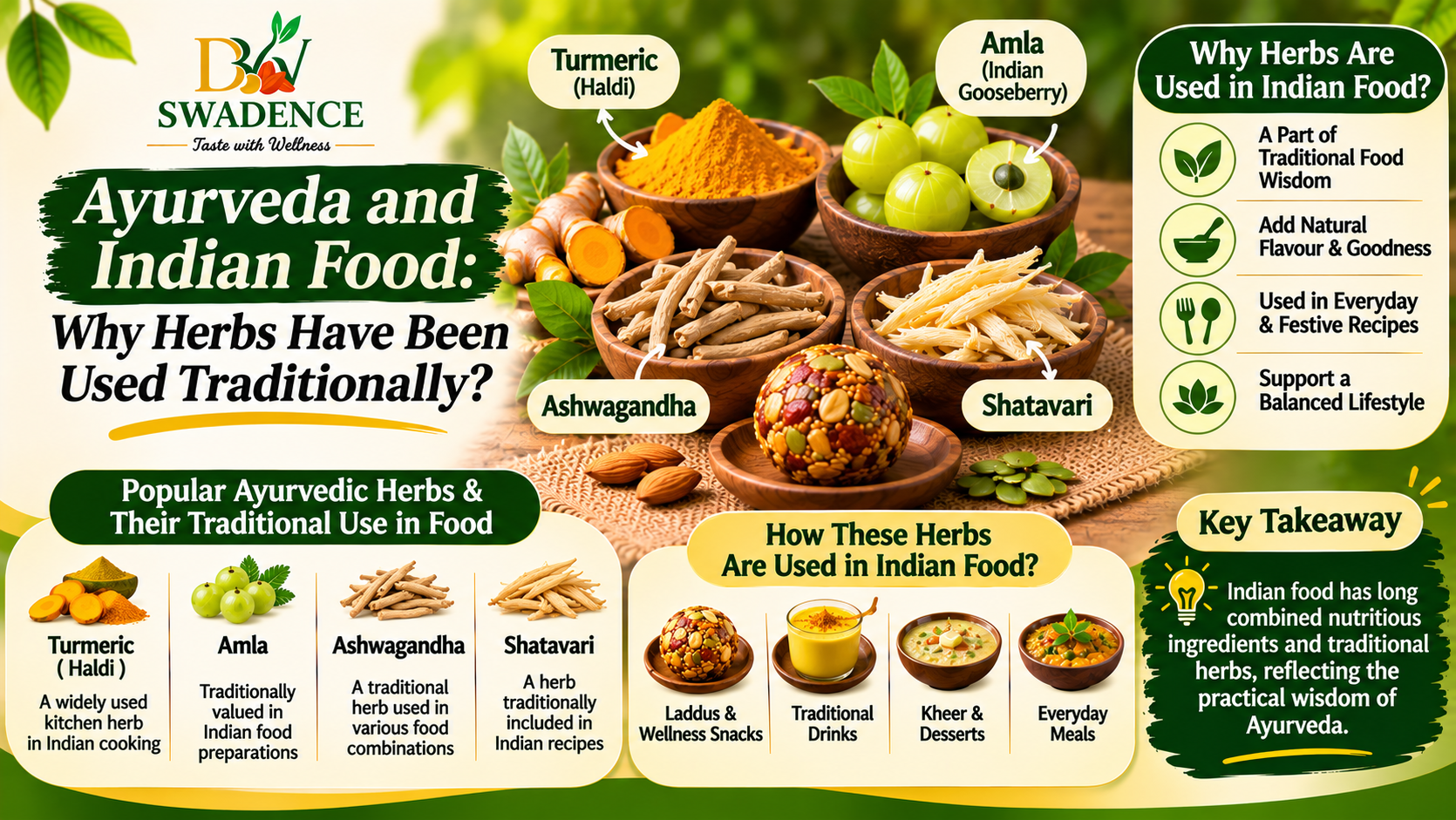
Ayurveda and Indian Food: Why Herbs Have Been Used Traditionally
Ayurveda and Indian Food: Why Herbs Have Been Used Traditionally
Indian food culture has always been closely connected with nature, seasonal ingredients, herbs and spices.
Walk into a traditional Indian kitchen and you may find turmeric, ginger, amla, tulsi, cinnamon and several other botanical ingredients being used in everyday cooking.
Many of these ingredients also have a long history in Ayurveda, India's traditional system of health and wellness.
From homemade food preparations to traditional herbal combinations, these ingredients have remained an important part of Indian culinary heritage.
But why have herbs been used for generations? How do they become part of everyday food? And what should modern consumers understand about their nutritional and health-related properties?
Let's explore the relationship between Ayurveda, traditional Indian food and botanical ingredients.
1. Understanding the Connection Between Ayurveda and Indian Food
Ayurveda is a traditional Indian system of health and wellness that has developed over many centuries.
Food, herbs, spices, daily routines and seasonal practices have important roles in Ayurvedic traditions.
Traditional Indian cooking also reflects many of these ideas.
For generations, families have used ingredients such as turmeric, ginger, cumin, coriander, amla and other botanicals in different food preparations.
These ingredients were selected for their distinctive flavours, culinary properties and traditional cultural associations.
However, Ayurveda and modern nutritional science are not identical.
Traditional use does not automatically establish that an ingredient can treat, cure or prevent a medical condition.
Understanding this distinction helps consumers appreciate traditional ingredients while making informed food choices.
2. Turmeric: A Familiar Ingredient in Indian Kitchens
Turmeric, commonly known as haldi, is one of the most recognisable ingredients in Indian cooking.
Its bright yellow colour, earthy aroma and distinctive flavour make it an important part of many traditional recipes.
Turmeric contains naturally occurring compounds called curcuminoids, including curcumin.
Some characteristics of turmeric include:
- Provides natural colour to food.
- Adds an earthy flavour to recipes.
- Contains naturally occurring plant compounds.
- Is traditionally used in several Indian food preparations.
- Features in many regional culinary traditions.
Turmeric is commonly used in vegetables, dals, curries, milk-based preparations and spice combinations.
Although curcumin has been studied for various biological properties, research findings do not mean that eating turmeric or turmeric-containing foods can replace medical treatment.
Its place in traditional cooking is valuable in its own right.
3. Amla: The Traditional Indian Gooseberry
Amla, also known as Indian gooseberry, has a long history in Indian food and traditional wellness practices.
It is known for its distinctive sour and slightly astringent taste.
Amla is particularly recognised as a dietary source of vitamin C.
It also contains naturally occurring plant compounds and other nutrients.
Common food preparations include:
- Amla chutney.
- Amla pickle.
- Amla juice.
- Dried amla preparations.
- Traditional amla-based food combinations.
Amla is also mentioned in several Ayurvedic traditions.
Its nutritional composition makes it an interesting ingredient in a varied diet, but it should not be considered a treatment for any medical condition.
4. Ashwagandha: An Important Herb in Ayurvedic Traditions
Ashwagandha is a botanical ingredient with a long history in Ayurvedic practices.
Its botanical name is Withania somnifera.
It is traditionally discussed in relation to strength, vitality and general wellness in Ayurvedic literature.
Ashwagandha contains naturally occurring compounds called withanolides.
Modern scientific research has examined several properties of these compounds, although evidence varies depending on the specific health outcome being studied.
It is important to understand that traditional use and proven clinical effectiveness are different things.
Ashwagandha is also not an ordinary kitchen spice.
It is commonly consumed in concentrated powder or supplement preparations rather than being used like everyday culinary herbs.
People considering ashwagandha supplements should seek professional advice, particularly during pregnancy, while breastfeeding, when taking medication or when managing an existing health condition.
5. Shatavari: A Botanical Ingredient in Traditional Ayurveda
Shatavari is another botanical ingredient traditionally used in Ayurveda.
Its botanical name is Asparagus racemosus.
It has a long history in traditional Indian wellness practices, particularly in formulations associated with women's health and general nourishment.
Shatavari contains naturally occurring plant compounds, including steroidal saponins.
Its traditional importance has made it a subject of modern scientific interest.
However, scientific evidence supporting specific health claims remains limited and varies by application.
Shatavari should not be treated as a substitute for prescribed medicines or professional medical advice.
Its traditional significance can be appreciated without making unsupported medical claims.
6. Why Herbs and Spices Are Used in Traditional Food
Herbs and spices contribute much more than colour to Indian cuisine.
They influence the aroma, flavour and overall character of a preparation.
For example:
Turmeric: Adds colour and an earthy flavour.
Ginger: Provides a distinctive warm and slightly sharp taste.
Cinnamon: Adds a naturally sweet and aromatic flavour.
Cardamom: Is commonly used in desserts and traditional drinks.
Cumin: Provides an earthy, warm flavour to savoury dishes.
Coriander: Adds a fresh and characteristic flavour to many recipes.
These ingredients demonstrate how traditional Indian cooking uses botanical diversity to create distinctive food experiences.
7. Traditional Herbal Ingredients in Everyday Indian Preparations
Different regions of India have developed their own ways of including herbs and spices in food.
Some examples include:
Herbal Drinks
Traditional preparations may combine ingredients such as ginger, tulsi, cinnamon and other spices.
Milk-Based Preparations
Turmeric and selected spices are sometimes added to warm milk-based drinks.
Chutneys and Pickles
Amla, ginger and other ingredients are used in regional chutneys and pickles.
Traditional Sweets
Certain regional sweets and food preparations incorporate selected nuts, spices and botanical ingredients.
Homemade Food Combinations
Families often combine different ingredients according to regional traditions, seasonal preferences and familiar recipes.
These practices reflect the diversity of Indian food culture.
8. Traditional Use vs Scientifically Proven Health Benefits
One of the most important things to understand about wellness ingredients is the difference between traditional use and scientific evidence.
An ingredient may have been used for hundreds of years, but that alone does not prove that it treats a medical condition.
Scientific research evaluates ingredients through laboratory studies, human studies and clinical trials.
The quality and amount of available evidence can differ significantly between ingredients.
For example:
- Turmeric and curcumin have been investigated in several research areas.
- Amla has been studied for its nutritional and biological properties.
- Ashwagandha has been examined in studies involving stress and other health outcomes.
- Shatavari has been investigated for various traditional applications.
However, research findings about concentrated extracts or supplements cannot automatically be applied to ordinary food portions.
Consumers should be careful with products claiming to cure diseases, guarantee hormonal balance, detoxify the body or provide instant health improvements.
Responsible wellness information should clearly distinguish traditional knowledge from established medical evidence.
9. Why Natural Ingredients Still Need Responsible Consumption
The word natural does not automatically mean safe for everyone.
Herbs and botanical ingredients can have different effects depending on their quantity, preparation and individual circumstances.
Some ingredients may interact with medications or may not be suitable for certain people.
A few important considerations include:
Pregnancy: Certain herbs and concentrated botanical supplements may be unsuitable during pregnancy.
Medication: Some herbal ingredients can interact with prescribed medicines.
Allergies: Botanical ingredients can cause allergic reactions in susceptible individuals.
Dosage: Concentrated supplements are different from the small quantities used in everyday cooking.
Product Quality: Source, purity, processing and storage all matter when selecting botanical products.
For people considering herbal supplements, advice from a qualified healthcare professional is important.
10. How Traditional Ingredients Fit Into Modern Food Choices
Modern consumers are increasingly interested in understanding what goes into their food.
They want to know:
- Which ingredients are included?
- Where do these ingredients come from?
- Why are they used?
- How are they prepared?
- What nutritional information is available?
- Are there any allergens or storage requirements?
These are practical questions that help people make informed purchasing decisions.
Traditional ingredients can be part of modern food products, but their presence should always be explained honestly.
Good food information should focus on transparency rather than exaggerated promises.
11. The Swadence Philosophy: Traditional Inspiration, Thoughtful Preparation
At DB6V Swadence, our approach is inspired by the relationship between traditional Indian food and modern lifestyles.
We believe familiar food traditions can be presented in convenient formats while maintaining attention to ingredient selection and preparation.
Our philosophy focuses on:
Traditional Inspiration: Respecting familiar Indian food practices.
Thoughtful Ingredients: Understanding the role of individual ingredients in a recipe.
Convenience: Making traditional food formats easier to include in everyday routines.
Portion Awareness: Offering individual servings in a convenient packaging format.
Transparency: Helping customers understand product ingredients and nutritional information.
We do not believe that one ingredient or one food product can replace a balanced diet or medical treatment.
Instead, we believe in making food choices more conscious and informed.
12. What Should You Check When Buying Herbal Wellness Foods?
Before purchasing a packaged product containing herbs or botanical ingredients, consider the following:
Complete Ingredient List: Check every ingredient used in the formulation.
Quantity Information: Understand how much of each ingredient is present when disclosed.
Nutritional Details: Review calories, carbohydrates, protein, fat and sugar.
Allergen Information: Look for relevant allergy warnings.
Manufacturing Details: Check manufacturer information and applicable food safety details.
Health Claims: Be cautious about products promising to cure diseases or deliver guaranteed results.
Storage Instructions: Follow the manufacturer's recommended storage conditions.
An informed customer is better equipped to understand the difference between a traditional food product and a medical or herbal supplement.
Frequently Asked Questions
Q1. What is the connection between Ayurveda and Indian food?
Ayurveda is a traditional Indian wellness system that includes ideas about food, herbs, spices and daily routines. Many ingredients used in traditional Indian cooking also appear in Ayurvedic practices.
Q2. Why is turmeric commonly used in Indian food?
Turmeric adds colour, flavour and aroma to food. It also contains naturally occurring compounds called curcuminoids.
Q3. Is amla a natural source of vitamin C?
Yes. Amla is recognised as a dietary source of vitamin C and is used in several traditional Indian food preparations.
Q4. What is ashwagandha traditionally used for?
Ashwagandha has a history of use in Ayurvedic practices associated with general wellness and vitality. Specific health benefits require appropriate scientific evidence.
Q5. What is shatavari?
Shatavari is a botanical ingredient known by the scientific name Asparagus racemosus. It has a history of use in traditional Ayurvedic practices.
Q6. Are all Ayurvedic herbs suitable for everyday consumption?
No. Different herbs have different properties, and some may interact with medicines or be unsuitable for certain individuals.
Q7. Does traditional use prove that an herb can cure diseases?
No. Traditional use and scientifically established medical effectiveness are different. Specific medical claims require appropriate scientific evidence.
Q8. Can traditional herbs replace prescribed medicines?
No. Herbal ingredients and traditional food preparations should not replace prescribed medical treatment.
Q9. Are herbs and spices useful in everyday cooking?
Yes. Many herbs and spices contribute flavour, aroma and variety to everyday meals. They can be included as part of a balanced diet.
Q10. What should consumers check before buying herbal wellness foods?
Consumers should review the ingredient list, nutritional information, quantity, allergen details, manufacturing information, storage instructions and health claims.
Final Thoughts
The relationship between Ayurveda and Indian food reflects a long history of using herbs, spices and natural ingredients in everyday life.
From turmeric and amla to ashwagandha and shatavari, different botanical ingredients have their own place in Indian traditions.
However, appreciating traditional knowledge also means understanding its limitations and distinguishing cultural practices from scientifically established medical benefits.
At DB6V Swadence, we celebrate traditional Indian food inspiration through thoughtful ingredients, convenient formats and a commitment to transparency.
Because wellness begins with understanding what we eat.
DB6V Swadence – Taste With Wellness.