
← सभी लेख
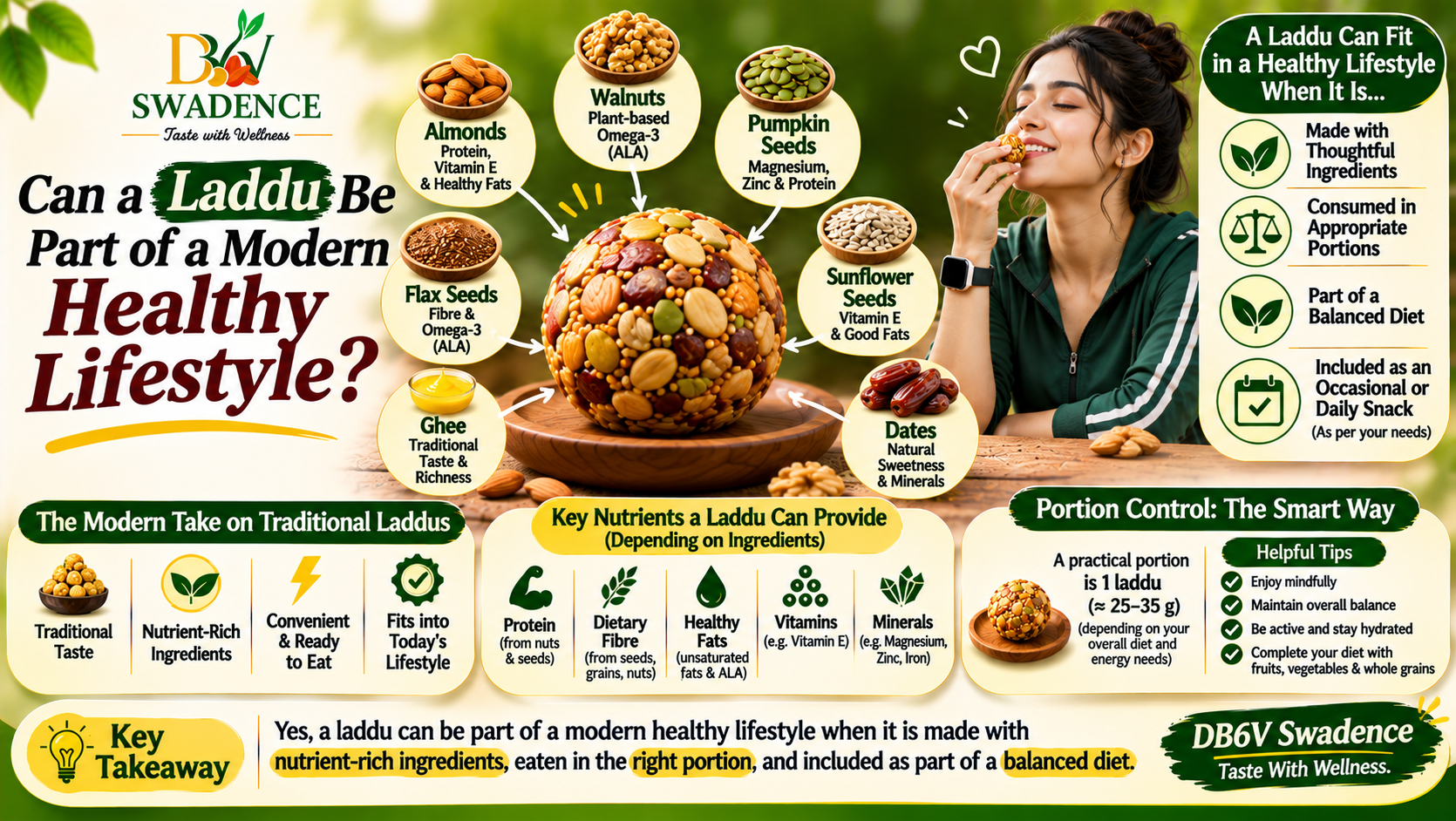
Can a Laddu Be Part of a Modern Healthy Lifestyle? A Complete Guide
Can a Laddu Be Part of a Modern Healthy Lifestyle? A Complete Guide
For generations, laddus have been an important part of Indian food culture.
From festivals and family celebrations to homemade snacks and traditional nourishment, these familiar round sweets have a special place in Indian kitchens.
Traditionally, laddus have been prepared using different ingredients such as besan, wheat flour, nuts, seeds, pulses, ghee and natural sweeteners.
But as food habits change and people become more conscious about nutrition, an interesting question arises:
Can a traditional laddu be part of a modern healthy lifestyle?
The answer depends on its ingredients, preparation, portion size and the overall eating habits of an individual.
A thoughtfully prepared laddu can offer more nutritional variety than a sweet made primarily with refined ingredients. However, it is still a food that needs to fit into a balanced diet.
Let's understand what makes the difference.
1. Understanding the Traditional Indian Laddu
Laddu is one of India's most familiar traditional sweet preparations.
Different regions have their own recipes, ingredients and preparation techniques.
Some popular varieties include:
- Besan laddu.
- Atta laddu.
- Motichoor laddu.
- Gond laddu.
- Dry fruit laddu.
- Ragi laddu.
- Peanut laddu.
- Til laddu.
Each variety has a different ingredient composition and nutritional profile.
For example, besan laddus are prepared using gram flour, while dry fruit laddus may contain almonds, walnuts, dates and different seeds.
This diversity is one of the reasons traditional Indian food offers so many possibilities for thoughtful preparation.
2. Ingredients Make a Difference
Not all laddus are nutritionally the same.
A laddu made primarily with refined sugar and flour has a different nutritional composition from one containing nuts, seeds, whole grains and pulses.
The ingredients determine the nutrients, calories, texture and overall characteristics of the final product.
Some ingredients commonly used in traditional wellness-inspired laddus include:
Almonds: Provide protein, dietary fibre, vitamin E and unsaturated fats.
Walnuts: Contain unsaturated fats and plant-based omega-3 fatty acid ALA.
Pumpkin Seeds: Provide protein, magnesium and zinc.
Flax Seeds: Contain dietary fibre and plant-based omega-3 ALA.
Dates: Provide natural sweetness along with carbohydrates, fibre and minerals.
Whole Grains: Can contribute carbohydrates, fibre and other nutrients.
Ghee: Adds flavour, aroma and richness to traditional preparations.
A thoughtful combination of ingredients can create a more varied nutritional profile.
3. Why Nuts Are Important in Traditional Laddus
Nuts have been used in Indian food preparations for generations.
Almonds, walnuts, cashews and pistachios are commonly included in traditional sweets and homemade snacks.
They contribute different nutrients.
Almonds provide vitamin E and fibre.
Walnuts contain plant-based omega-3 fatty acids.
Cashews provide minerals such as copper and magnesium.
Pistachios contribute protein, fibre and other micronutrients.
When incorporated into a recipe, nuts also improve texture and flavour.
However, they are energy-dense foods, so their quantity in a recipe matters.
4. Seeds Add Nutritional Variety
Seeds are another interesting ingredient group used in modern wellness-inspired food preparations.
Different seeds offer different nutritional characteristics.
Flax Seeds
Flax seeds contain dietary fibre and alpha-linolenic acid (ALA).
Pumpkin Seeds
Pumpkin seeds provide protein, magnesium and zinc.
Sunflower Seeds
Sunflower seeds contain vitamin E and unsaturated fats.
Sesame Seeds
Sesame seeds provide unsaturated fats, protein and minerals such as calcium.
Adding different seeds to a laddu formulation can introduce nutritional variety while contributing to its texture and flavour.
The actual nutritional contribution depends on the quantity used.
5. The Role of Whole Grains and Pulses
Traditional Indian recipes frequently use grains and pulses as their main ingredients.
Besan, wheat flour, ragi and other grains can be used in different laddu preparations.
These ingredients contribute carbohydrates and other nutrients.
Whole grains can also provide dietary fibre.
Pulses such as chickpeas and gram flour contribute plant-based protein and fibre.
Choosing ingredients thoughtfully can help create recipes with different nutritional characteristics.
However, the complete formulation matters more than any single ingredient.
6. Refined Sugar vs Naturally Sweet Ingredients
Sweetness is an important characteristic of laddus.
Traditional recipes commonly use sugar, jaggery or other sweetening ingredients.
Modern recipes may also use dates and raisins to provide sweetness.
These ingredients have different nutritional compositions.
For example:
Refined Sugar: Primarily provides simple carbohydrates and energy.
Dates: Provide naturally occurring sugars, fibre and some micronutrients.
Raisins: Provide naturally occurring sugars and small amounts of fibre and minerals.
Jaggery: Contains sugars and small quantities of certain minerals.
An important point is that natural sweetness does not mean unlimited consumption.
Dates, raisins and jaggery still contribute carbohydrates and calories.
The overall quantity of sweetening ingredients remains important.
7. Ghee and Its Place in Traditional Laddu Preparation
Ghee has been used in Indian cooking for centuries.
It contributes aroma, flavour and richness to traditional recipes.
In laddu preparation, ghee can help combine ingredients and create the characteristic texture associated with homemade sweets.
It also contributes dietary fat and energy.
Although ghee has an important place in traditional Indian cuisine, it is still a source of saturated fat.
Therefore, the amount used in a recipe matters.
A balanced approach focuses on the complete ingredient composition rather than assuming that traditional ingredients are automatically suitable in unlimited quantities.
8. Why Portion Control Matters
One of the most important aspects of healthy eating is understanding portion size.
Even when a food contains nutritious ingredients, eating large quantities can increase overall calorie intake.
For example:
- Almonds provide nutrients but are energy-dense.
- Walnuts contain healthy fats but also contribute calories.
- Seeds provide fibre and minerals but are not calorie-free.
- Ghee contributes flavour but also adds energy.
- Dates provide natural sweetness but contain carbohydrates.
This is why portion awareness matters when consuming wellness-inspired laddus.
The appropriate serving size depends on the recipe, nutritional composition and individual dietary requirements.
Instead of assuming that a healthy ingredient makes a food unlimited, it is better to enjoy an appropriate portion.
9. Can a Laddu Replace a Complete Meal?
A laddu may be a convenient snack, but it should not automatically be considered a complete meal.
Even a recipe containing several nuts, seeds and grains cannot necessarily provide all the nutrients required for a balanced meal.
A complete eating pattern needs different food groups, including:
- Fruits.
- Vegetables.
- Whole grains.
- Pulses.
- Suitable protein sources.
- Dairy or alternatives, where appropriate.
- Nuts and seeds.
A laddu can complement an eating routine, but it should not replace dietary variety.
10. Can Laddus Fit Into a Busy Modern Lifestyle?
Modern lifestyles often involve busy schedules, long working hours and limited time for preparing snacks.
This is one reason convenient food formats have become popular.
Individually packed snacks can make portion awareness easier because the serving is already separated.
A pre-portioned laddu can be convenient for:
Working Professionals: A ready-to-eat snack during a busy day.
Students: A convenient option between regular meals.
Travellers: An easily carried food option.
Busy Households: A simple addition to everyday snack routines.
However, convenience should not replace attention to ingredients, nutrition labels and individual dietary needs.
11. Why Ingredient Transparency Matters
When purchasing packaged wellness foods, consumers should look beyond attractive packaging.
Understanding the ingredient list helps people make informed decisions.
Important things to check include:
Complete Ingredient List: Know which ingredients are used.
Sweetening Ingredients: Understand whether the product contains sugar, jaggery, dates or other sweeteners.
Nutritional Information: Review calories, carbohydrates, protein, fat and fibre.
Serving Size: Understand the quantity represented by one serving.
Allergen Information: Check for nuts, seeds, milk and other relevant allergens.
Storage Instructions: Follow the manufacturer's recommendations.
Shelf Life: Check the expiry or best-before information.
A trustworthy food brand should make these details easy to understand.
12. Are Wellness Laddus Suitable for Everyone?
Not necessarily.
Even when prepared with carefully selected ingredients, a laddu may not be suitable for every individual.
Some important considerations include:
People with Diabetes: Should consider total carbohydrate content, sweetening ingredients and portion size rather than relying only on claims such as natural or sugar-free.
People with Nut Allergies: Must avoid products containing relevant allergens.
People Monitoring Calorie Intake: Should consider the energy content and serving size.
People with Dietary Restrictions: Should check the complete ingredient list.
Children: Whole nuts and other hard ingredients should be prepared in an age-appropriate form to reduce choking risks.
Individual dietary requirements can vary, so professional guidance may be helpful when managing a medical condition.
13. Traditional Food Meets Modern Nutrition
The biggest advantage of traditional Indian food is its diversity.
Our kitchens have always used different combinations of grains, pulses, nuts, seeds, spices and other ingredients.
Modern food preparation provides an opportunity to understand these ingredients more carefully.
For example:
- Measuring ingredient quantities.
- Understanding nutritional composition.
- Paying attention to portion size.
- Choosing suitable sweetening ingredients.
- Improving packaging convenience.
- Providing transparent food information.
These changes can make traditional food formats more compatible with modern lifestyles without losing their familiar identity.
14. How DB6V Swadence Approaches Traditional Laddus
At DB6V Swadence, our philosophy begins with a simple thought:
Traditional Indian food can be presented in a convenient modern format while maintaining respect for familiar ingredients and flavours.
Our approach focuses on five important principles.
Traditional Inspiration: Taking inspiration from Indian homemade food traditions.
Thoughtful Ingredients: Selecting ingredients with attention to their role in the recipe.
Preparation: Paying attention to flavour, texture and ingredient handling.
Portion Awareness: Using individual sachets to make daily servings convenient.
Transparency: Helping customers understand what goes into their food.
Our 30-sachet concept is designed around one simple idea: a defined serving for each day.
The actual nutritional suitability of a serving depends on its formulation and the individual's dietary needs.
We do not believe that one laddu can transform someone's health or replace a balanced diet.
Instead, we focus on making traditional food more convenient and thoughtfully prepared.
15. Simple Tips for Enjoying Laddus Mindfully
Here are a few practical suggestions:
1. Check the ingredient list before purchasing.
2. Understand the nutritional information.
3. Pay attention to serving size.
4. Enjoy laddus as part of an overall balanced diet.
5. Include fruits and vegetables in regular meals.
6. Choose different sources of protein and fibre.
7. Avoid assuming that natural ingredients mean unlimited consumption.
8. Maintain regular physical activity and healthy daily habits.
A mindful approach to food is more sustainable than following temporary health trends.
Frequently Asked Questions
Q1. Can a laddu be part of a healthy lifestyle?
Yes. A thoughtfully prepared laddu can fit into a balanced eating pattern when its ingredients, nutritional composition and portion size are considered.
Q2. Which ingredients are commonly used in wellness laddus?
Common ingredients include almonds, walnuts, pumpkin seeds, flax seeds, whole grains, pulses, dates and ghee.
Q3. Are dry fruit laddus healthier than regular sweets?
Their nutritional value depends on the ingredients, quantities and preparation methods. A dry fruit laddu may provide more fibre and unsaturated fats, but it can also be energy-dense.
Q4. Does natural sweetness mean a laddu is sugar-free?
No. Dates and raisins contain naturally occurring sugars. Natural sweetness does not automatically mean sugar-free or carbohydrate-free.
Q5. Why is portion control important when eating laddus?
Nuts, seeds, ghee and sweetening ingredients contribute energy. Appropriate portions help manage overall food intake.
Q6. Can a laddu replace breakfast?
A laddu alone should not automatically be considered a nutritionally complete breakfast. A balanced breakfast should include a variety of suitable foods.
Q7. Are nuts and seeds useful ingredients in laddus?
Yes. They can contribute protein, fibre, unsaturated fats, vitamins and minerals, depending on the ingredients and quantities used.
Q8. Can people with diabetes eat wellness laddus?
Suitability depends on total carbohydrates, ingredients, serving size and individual blood glucose management. A wellness label does not automatically make a product suitable for diabetes.
Q9. What is the benefit of individually packed laddus?
Individual packaging can improve convenience, make portions easier to understand and support consistent snack routines.
Q10. What should customers check before buying a wellness laddu?
Customers should review the complete ingredient list, nutritional information, serving size, allergens, storage instructions and manufacturing details.
Final Thoughts
A laddu does not have to remain limited to festivals and special occasions.
With thoughtful ingredient selection, appropriate preparation and portion awareness, it can also become part of a modern eating routine.
The important thing is to understand what goes into the recipe and how it fits into an individual's overall diet.
At DB6V Swadence, we celebrate the familiarity of traditional Indian food while bringing convenience, thoughtful ingredients and transparency into everyday choices.
Because enjoying traditional food and making conscious food choices can go hand in hand.
DB6V Swadence – Taste With Wellness.