
← All articles
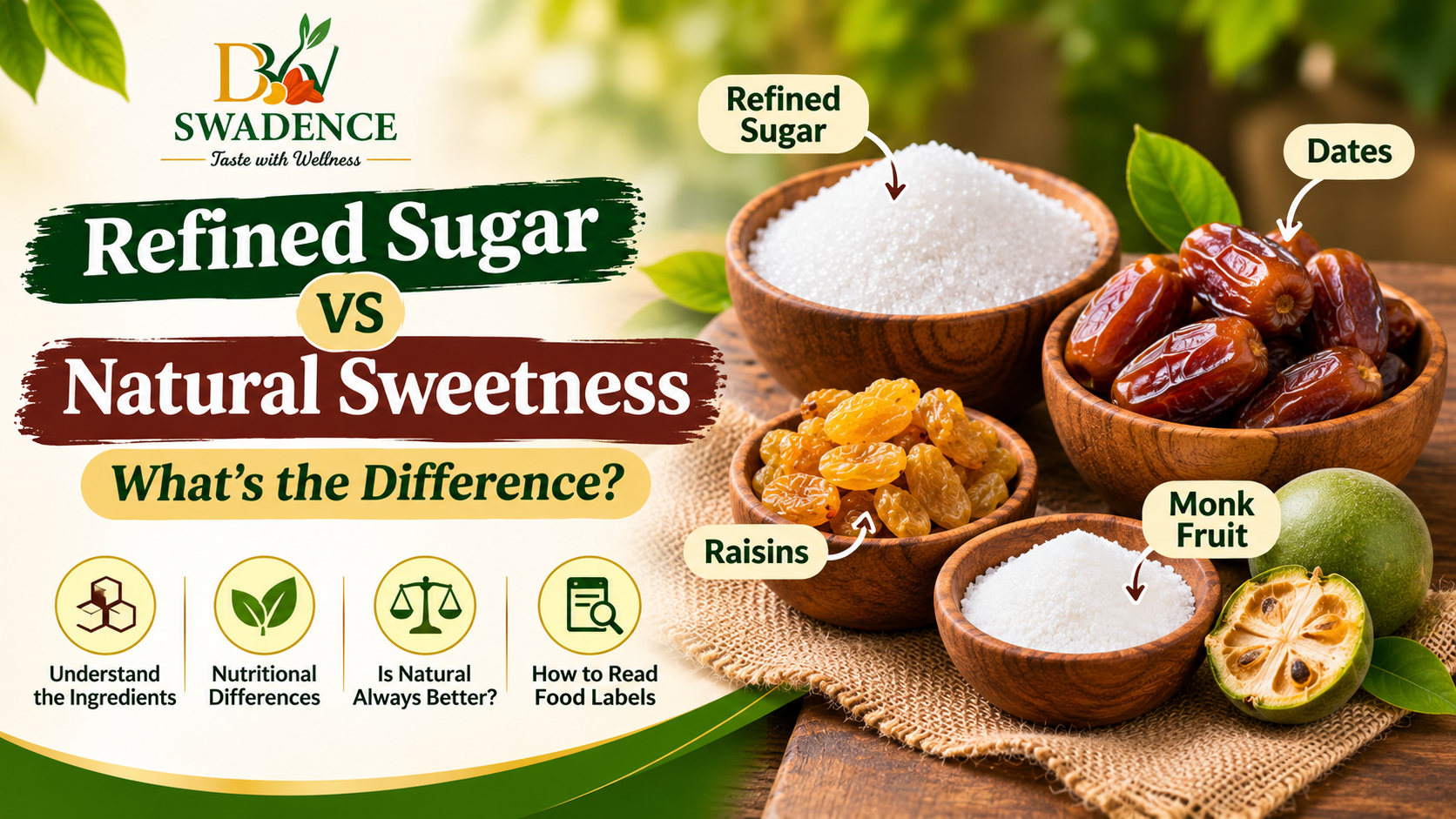
Refined Sugar vs Natural Sweetness: What's the Difference?
Refined Sugar vs Natural Sweetness: What's the Difference?
Sweetness is one of the most familiar parts of our everyday food experience. From morning tea and homemade desserts to traditional Indian laddus, sweet ingredients have always played an important role in our kitchens.
However, as people become more conscious about their food choices, there is growing interest in alternatives to conventional refined sugar.
Ingredients such as dates, raisins and monk fruit are increasingly used in modern food preparations.
But are these ingredients really different from refined sugar? Does natural sweetness always mean a healthier choice?
Let's understand the differences.
1. Understanding Refined Sugar
Refined sugar is commonly produced from sugarcane or sugar beet through processing and purification.
It primarily consists of sucrose, a carbohydrate that provides energy to the body.
Refined sugar is widely used in:
- Traditional Indian sweets.
- Cakes and bakery products.
- Chocolates and desserts.
- Packaged snacks.
- Sweetened beverages.
Its consistent sweetness and texture make it a popular ingredient in food manufacturing and home cooking.
However, regularly consuming excessive amounts of added sugar can contribute to an unhealthy dietary pattern.
Understanding how much added sugar we consume is therefore an important part of mindful eating.
2. Dates: Natural Sweetness With Nutritional Value
Dates are naturally sweet fruits that have been consumed across different cultures for generations.
They contain naturally occurring sugars, dietary fibre and certain minerals.
In traditional Indian cooking, dates are commonly used in:
- Dry fruit laddus.
- Homemade energy bites.
- Traditional sweets.
- Smoothies.
- Natural fruit-based sweetening mixtures.
Dates provide sweetness along with their characteristic flavour and texture.
However, they are not sugar-free. Their natural sugar content contributes to total carbohydrate and calorie intake.
Their nutritional contribution depends on the quantity consumed and the overall recipe.
3. Raisins: Sweetness From Dried Grapes
Raisins are produced by drying grapes.
During the drying process, water content decreases, concentrating their naturally occurring sugars.
Raisins also contain dietary fibre and certain micronutrients.
They are commonly used in Indian desserts, kheer, dry fruit mixtures and homemade laddus.
Their naturally sweet flavour makes them useful in recipes where additional sweetness is desired.
However, because raisins contain concentrated natural sugars, portion size remains important.
4. Monk Fruit: Understanding a Different Sweetening Option
Monk fruit is a small fruit traditionally associated with parts of Asia.
Its sweetness comes from naturally occurring compounds known as mogrosides.
Purified monk fruit extracts are used as high-intensity sweeteners in some food products.
Unlike dates and raisins, purified monk fruit extracts can provide sweetness with little or no sugar.
They are used in certain beverages, desserts and other food formulations.
However, commercial monk fruit sweetener products may contain additional ingredients or bulking agents.
This is why checking the complete ingredient list is important.
5. Refined Sugar vs Dates vs Raisins vs Monk Fruit
Each ingredient has different characteristics.
Refined Sugar
- Primarily consists of sucrose.
- Provides sweetness and energy.
- Commonly used in conventional sweets and beverages.
Dates
- Naturally contain sugars.
- Provide dietary fibre and certain minerals.
- Add sweetness, flavour and texture.
Raisins
- Naturally concentrated in fruit sugars.
- Provide some fibre and micronutrients.
- Commonly used in traditional desserts.
Monk Fruit Extract
- Contains naturally occurring sweet compounds.
- Purified extracts can provide sweetness without significant sugar.
- Commercial formulations may include other ingredients.
The best choice depends on the recipe, nutritional requirements and overall eating habits.
6. Is Natural Sweetness Always Better?
One of the biggest misconceptions in modern food awareness is that anything labelled natural is automatically healthier.
That is not necessarily true.
Dates and raisins contain naturally occurring sugars. They still contribute to the total carbohydrate intake.
Similarly, a product containing monk fruit may have other ingredients that influence its nutritional profile.
Instead of focusing only on whether an ingredient is natural or refined, consider:
- What does the ingredient contain?
- How much is used?
- What is the serving size?
- How does it contribute to total sugar intake?
- What does the complete nutritional label say?
Making informed choices requires understanding the entire recipe rather than judging a product by one ingredient.
7. Why Food Labels Deserve Your Attention
Food packaging often highlights terms such as natural, sugar-free and no added sugar.
While these descriptions can provide useful information, they do not tell the complete nutritional story.
Before purchasing a packaged food, check:
Total Sugars: Includes naturally occurring and added sugars.
Added Sugars: Indicates sugars added during food preparation or manufacturing.
Total Carbohydrates: Includes carbohydrates from different ingredients.
Serving Size: Helps you understand the nutritional contribution of the quantity you actually consume.
Ingredient List: Shows which ingredients are used in the product.
For people managing diabetes or blood glucose levels, checking total carbohydrates and portion sizes is particularly important.
A food made without refined sugar is not automatically suitable for every dietary requirement.
8. Making Conscious Sweetness Choices in Everyday Life
You do not necessarily need to eliminate every sweet ingredient from your diet.
Instead, consider making small, practical changes.
Some useful habits include:
- Reduce excessive added sugar in everyday beverages.
- Explore recipes using whole fruits for sweetness.
- Check nutrition labels before purchasing packaged snacks.
- Be mindful of portions when consuming dried fruits.
- Avoid assuming that sugar-free products are carbohydrate-free.
- Choose foods according to your individual dietary needs.
Consistency and awareness are more valuable than following every new food trend.
9. The Swadence Philosophy: Transparency Before Trends
At DB6V Swadence, we believe that understanding ingredients is an important part of conscious food choices.
Our approach focuses on thoughtfully selected ingredients, traditional Indian food inspiration and convenient everyday food formats.
We believe consumers should be able to understand what goes into the food they purchase.
Rather than presenting one sweetener as a miracle alternative, we encourage people to understand the nutritional characteristics of different ingredients.
Because good food choices begin with good information.
Frequently Asked Questions
Q1. What is the difference between refined sugar and natural sweeteners?
Refined sugar primarily consists of sucrose, while natural sweetening ingredients such as dates and raisins contain naturally occurring sugars along with other food components.
Q2. Are dates completely sugar-free?
No. Dates naturally contain sugars and carbohydrates, although they also provide dietary fibre and certain minerals.
Q3. Are raisins healthier than refined sugar?
Raisins provide fibre and some micronutrients that refined sugar does not. However, they also contain concentrated natural sugars. Their suitability depends on the overall diet and portion size.
Q4. What is monk fruit sweetener?
Monk fruit sweetener is made using sweet compounds called mogrosides extracted from monk fruit. Purified extracts can provide sweetness with little or no sugar.
Q5. Does no added sugar mean sugar-free?
No. A product with no added sugar can still contain naturally occurring sugars from fruits, milk or other ingredients.
Q6. Is natural sweetness suitable for people with diabetes?
Natural sweeteners such as dates and raisins still contribute carbohydrates. People managing diabetes should consider total carbohydrate intake, portion size and individual medical advice.
Q7. Why should we read ingredient labels?
Ingredient labels help consumers understand the composition of packaged foods, identify sweeteners and make informed purchasing decisions.
Final Thoughts
Understanding sweetness is not about choosing one ingredient and avoiding everything else.
It is about knowing what different sweeteners contribute, understanding food labels and making choices that suit your dietary needs.
Dates, raisins, monk fruit and refined sugar each have different characteristics and uses.
At DB6V Swadence, we believe ingredient transparency and thoughtful food preparation should always come before marketing trends.
DB6V Swadence – Taste With Wellness.