
← सभी लेख
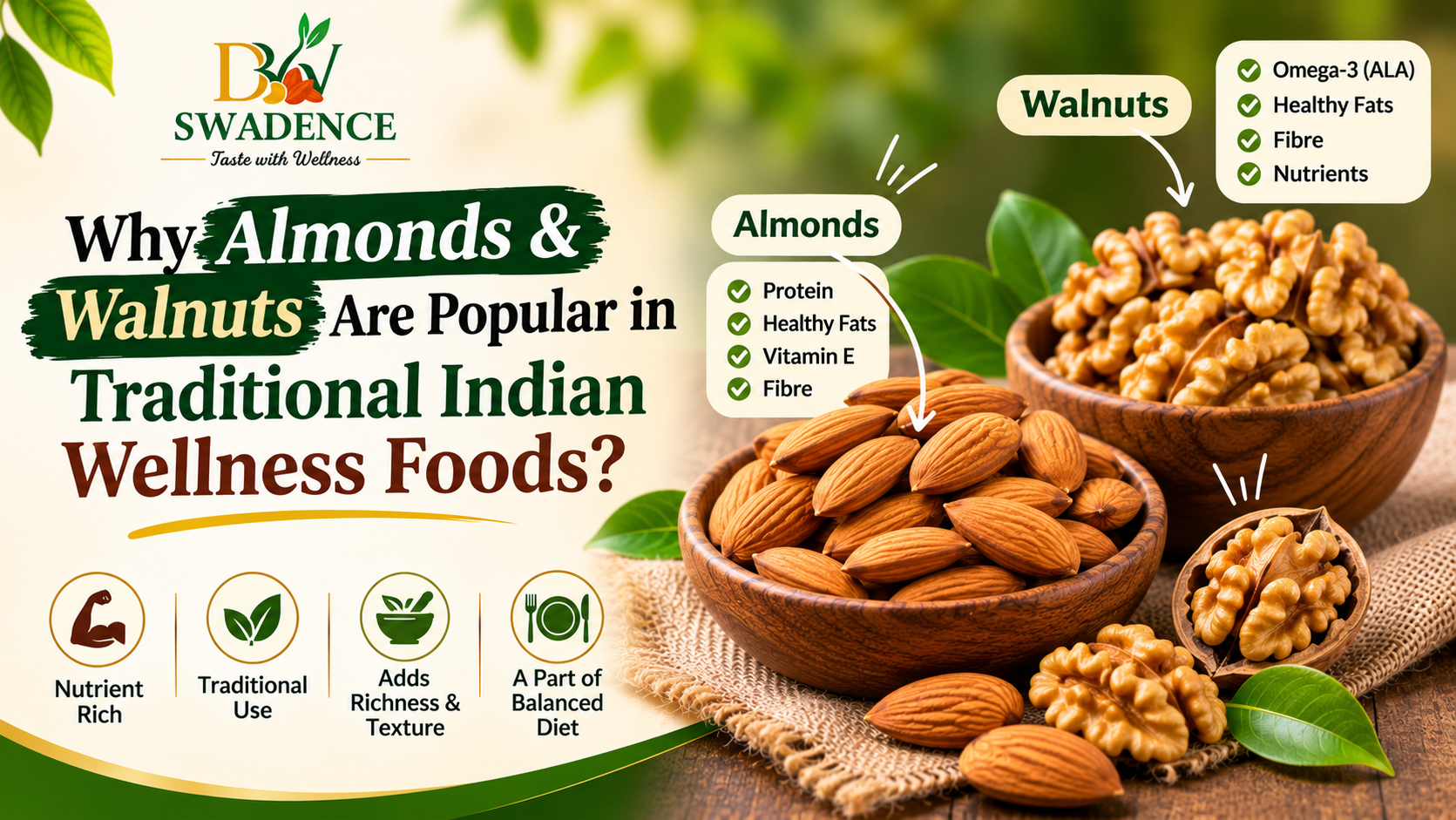
Why Almonds and Walnuts Are Popular in Traditional Indian Wellness Foods
Why Almonds and Walnuts Are Popular in Traditional Indian Wellness Foods
Almonds and walnuts have been part of Indian food traditions for generations. From morning routines and homemade dry fruit mixtures to traditional laddus and festive preparations, these two nuts have maintained a special place in Indian kitchens.
But their popularity is not just about tradition.
Almonds and walnuts offer different nutritional properties, distinctive flavours and versatility that make them valuable ingredients in everyday food preparations.
Whether enjoyed individually or combined with other ingredients, they can add nutritional variety to a balanced diet.
Let's understand what makes these nuts so popular.
1. Almonds: A Small Nut With Valuable Nutrients
Almonds are among the most widely consumed nuts in India.
They are known for their nutritional composition and versatility in cooking.
Almonds provide several nutrients, including:
- Plant-based protein.
- Dietary fibre.
- Vitamin E.
- Magnesium.
- Monounsaturated fats.
Vitamin E is an antioxidant that helps protect cells from oxidative damage. Magnesium contributes to several normal functions of the body.
Almonds also provide a satisfying combination of flavour, crunch and richness.
This makes them a popular ingredient in homemade snacks, dry fruit mixtures and traditional Indian sweets.
2. Walnuts: A Natural Source of Plant-Based Omega-3
Walnuts are particularly interesting because of their alpha-linolenic acid (ALA) content.
ALA is an essential plant-based omega-3 fatty acid that the human body cannot produce on its own.
Walnuts also contain:
- Polyunsaturated fats.
- Dietary fibre.
- Plant-based protein.
- Magnesium.
- Other naturally occurring plant compounds.
Their slightly earthy and rich flavour makes them suitable for both sweet and savoury recipes.
Walnuts are commonly included in dry fruit mixes, homemade laddus, desserts and breakfast preparations.
3. Almonds vs Walnuts: Understanding Their Nutritional Differences
Both almonds and walnuts are nutrient-rich foods, but their nutritional profiles are different.
Almonds
Almonds are particularly known for:
- Vitamin E.
- Magnesium.
- Dietary fibre.
- Plant-based protein.
- Monounsaturated fats.
Walnuts
Walnuts are particularly known for:
- Alpha-linolenic acid (ALA).
- Polyunsaturated fats.
- Dietary fibre.
- Plant-based protein.
- Naturally occurring plant compounds.
Rather than considering one universally better than the other, including variety in your diet can be a practical approach.
Each nut contributes something different.
4. Why Are Almonds and Walnuts Used in Traditional Indian Foods?
Indian kitchens have a long history of using nuts in everyday cooking and festive preparations.
Almonds and walnuts are frequently included in recipes because they contribute flavour, texture and nutritional variety.
Some popular preparations include:
Dry Fruit Laddus: Nuts are combined with dates, seeds and other ingredients to create traditional sweet preparations.
Panjiri: A traditional preparation that may include roasted flour, ghee, nuts and other ingredients.
Kheer: Almonds and walnuts can be added to enhance the flavour and texture of this traditional dessert.
Homemade Energy Mixes: Nuts can be combined with seeds and dried fruits for convenient snacks.
Breakfast Bowls: Chopped almonds and walnuts can be added to oats, porridge and other breakfast preparations.
Their versatility makes them useful ingredients across different types of recipes.
5. The Role of Healthy Fats in Everyday Nutrition
Fats are an essential part of a balanced diet.
They provide energy and help the body absorb fat-soluble vitamins.
Almonds and walnuts contain predominantly unsaturated fats, although their fat profiles differ.
Almonds are particularly rich in monounsaturated fats, while walnuts are notable for their polyunsaturated fats, including ALA omega-3.
Including a variety of nuts in appropriate portions can contribute to a more diverse dietary pattern.
However, fats are energy-dense, so the total quantity consumed still matters.
6. Why Fibre Matters When Eating Nuts
Dietary fibre is an important component of everyday nutrition.
It contributes to digestive health and can help make meals more satisfying.
Almonds and walnuts both contain dietary fibre.
Adding nuts to meals or snacks can be one way to increase dietary variety.
However, no single food provides all the fibre your body needs.
A balanced diet should also include vegetables, fruits, whole grains, pulses and other fibre-rich foods.
7. Can Almonds and Walnuts Be Consumed Every Day?
For many people, almonds and walnuts can be included in everyday eating habits.
However, both are energy-dense foods, so portion awareness is important.
The appropriate quantity depends on:
- Individual energy requirements.
- Overall dietary pattern.
- Physical activity.
- Personal food preferences.
- Existing dietary restrictions.
People with nut allergies should avoid the relevant nuts and carefully check packaged food labels for allergen information.
The goal is to enjoy nutritional variety without consuming more than your dietary needs require.
8. Combining Almonds and Walnuts With Other Ingredients
Almonds and walnuts can become part of a more varied recipe when combined with other traditional ingredients.
Some popular combinations include:
- Flaxseeds.
- Pumpkin seeds.
- Sunflower seeds.
- Dates.
- Raisins.
- Whole grains.
- Traditional roasted ingredients.
Each ingredient contributes a different flavour and nutritional profile.
The proportions matter because simply adding more ingredients does not automatically make a recipe more nutritious.
Thoughtful formulation is important when preparing balanced food products.
9. How Swadence Brings Traditional Ingredients Into Modern Food Habits
At DB6V Swadence, we appreciate the role of traditional Indian ingredients in everyday food culture.
Almonds and walnuts are valued for their distinctive flavour, texture and nutritional contribution.
Our approach focuses on bringing familiar ingredients together in convenient food formats.
We believe that traditional food ideas can evolve with modern lifestyles through:
- Thoughtful ingredient selection.
- Carefully considered combinations.
- Convenient individual packaging.
- Defined daily portions.
- Greater ingredient transparency.
The idea is not to treat almonds or walnuts as miracle foods.
It is to appreciate their nutritional contribution as part of a balanced approach to everyday eating.
Frequently Asked Questions
Q1. What are the nutritional benefits of almonds?
Almonds provide plant-based protein, dietary fibre, vitamin E, magnesium and predominantly monounsaturated fats.
Q2. Why are walnuts considered a source of omega-3?
Walnuts contain alpha-linolenic acid (ALA), an essential plant-based omega-3 fatty acid.
Q3. Which is healthier, almonds or walnuts?
Both offer different nutritional benefits. Almonds are particularly known for vitamin E, while walnuts are notable for their ALA omega-3 content. Neither is universally better.
Q4. Can almonds and walnuts be eaten together?
Yes. They can be combined in snacks, breakfast preparations and traditional recipes as part of a balanced diet.
Q5. Are almonds and walnuts good sources of protein?
Both provide plant-based protein, although they should not be considered complete replacements for all other protein sources in the diet.
Q6. Can nuts be included in everyday snacks?
Yes. Nuts can be included in everyday snacks while keeping portion sizes and individual dietary requirements in mind.
Q7. Why are almonds and walnuts used in traditional Indian laddus?
They contribute flavour, texture, richness and nutritional variety to traditional recipes.
Final Thoughts
Almonds and walnuts have earned their place in Indian food traditions through their versatility, flavour and nutritional composition.
While almonds provide nutrients such as vitamin E and magnesium, walnuts are particularly valued for their plant-based omega-3 content.
Including different nuts in appropriate portions can be a simple way to introduce nutritional variety into everyday meals.
At DB6V Swadence, we celebrate these familiar ingredients by bringing traditional food inspiration into convenient modern formats.
Because thoughtful food choices can begin with the simplest ingredients.
DB6V Swadence – Taste With Wellness.