
← सभी लेख
Ghee in Traditional Indian Recipes: Why Is It Used?
Ghee in Traditional Indian Recipes: Why Is It Used?
There is something special about the aroma of ghee in an Indian kitchen.
Whether it is freshly prepared laddus, roasted flour for panjiri, homemade halwa or a warm paratha, ghee has been an important part of traditional Indian cooking for generations.
Its rich aroma, distinctive flavour and ability to enhance food texture make it much more than an ordinary cooking ingredient.
But why do traditional Indian recipes use ghee so frequently? What makes it different from other cooking fats? And does it offer any nutritional value?
Let's understand the role of ghee in Indian food traditions.
1. What Is Ghee and How Is It Made?
Ghee is a type of clarified butter traditionally prepared by heating butter to remove most of its water content and separating the milk solids.
During this process, the butter develops a characteristic golden colour and rich aroma.
The final product is primarily composed of milk fat.
Ghee has been used in different Indian culinary traditions for centuries, particularly in preparations where richness, aroma and texture are important.
Its distinctive properties make it suitable for cooking, roasting and preparing traditional sweets.
2. Why Is Ghee So Popular in Indian Cooking?
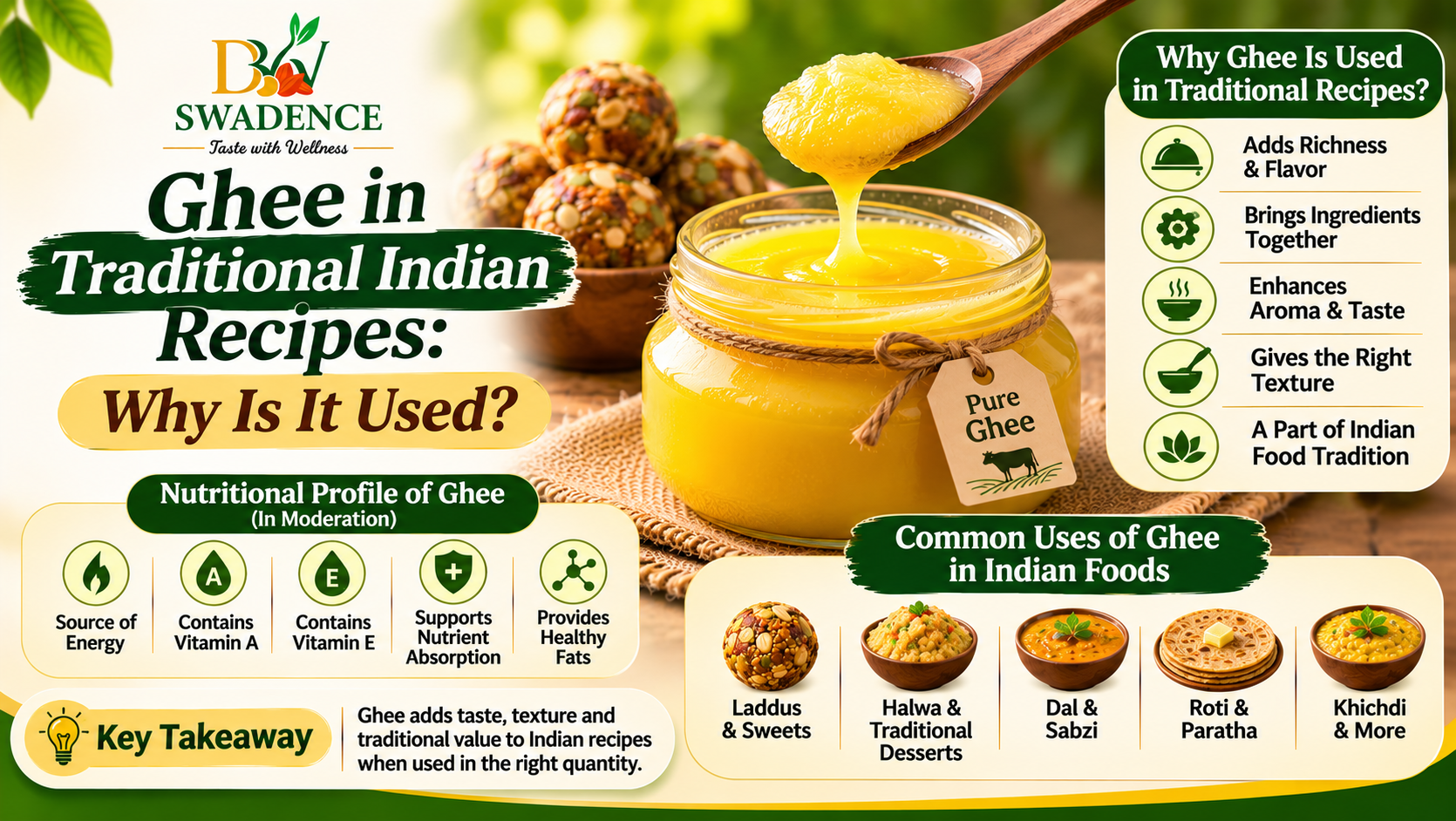
Ghee is popular because it contributes several qualities to food.
Rich Flavour
Ghee adds a distinctive buttery taste that enhances the overall flavour of traditional recipes.
Pleasant Aroma
Heating ghee releases its characteristic aroma, making it especially popular in roasted flour preparations and Indian sweets.
Smooth Texture
Ghee helps create the rich and smooth texture associated with many traditional foods.
Ingredient Binding
In certain preparations, ghee helps combine dry ingredients and contributes to the desired consistency.
Traditional Cooking Heritage
Ghee has a long-standing place in Indian kitchens and is closely associated with homemade food, celebrations and family recipes.
These characteristics explain why it continues to be used in traditional cooking.
3. The Role of Ghee in Traditional Indian Laddus
Ghee is one of the familiar ingredients in many traditional Indian laddu recipes.
Depending on the recipe, it may be combined with roasted besan, wheat flour, nuts, seeds, jaggery or other ingredients.
Its role goes beyond adding flavour.
Ghee can help:
- Bind roasted ingredients.
- Improve the texture of the mixture.
- Enhance the overall aroma.
- Add richness to the preparation.
- Create the characteristic consistency of certain laddus.
Different recipes require different quantities of ghee.
The amount used depends on the ingredients, preparation method and desired texture.
4. Why Is Ghee Used for Roasting Ingredients?
Roasting is an important step in many traditional Indian preparations.
Besan, wheat flour, nuts and other ingredients are often roasted to develop their characteristic flavours.
Ghee contributes to this process by providing a cooking medium and adding richness.
When flour is roasted with ghee over controlled heat, it develops a pleasant aroma and a deeper flavour.
However, proper heat management is important.
Excessive heating can burn ingredients and negatively affect their taste.
Traditional recipes often require patience because flavour and texture develop gradually during preparation.
5. Ghee in Popular Indian Foods
Ghee is used in many familiar Indian preparations.
Laddus
Ghee helps bind ingredients and contributes to the rich texture of traditional laddus.
Panjiri
It is commonly used while roasting flour and combining nuts, seeds and other ingredients.
Halwa
Ghee adds richness and contributes to the characteristic texture of several halwa preparations.
Paratha
A small amount of ghee can enhance flavour and create a satisfying finish.
Khichdi
Ghee is sometimes added as a finishing ingredient to enhance aroma and taste.
Dal
A ghee-based tadka is a popular way to add flavour to different dal preparations.
Each recipe uses ghee differently depending on its culinary purpose.
6. Understanding the Nutritional Properties of Ghee
Ghee is primarily a source of dietary fat and provides concentrated energy.
It also contains small amounts of fat-soluble vitamins, although the actual quantities can vary.
Some nutritional characteristics include:
Dietary Fat: Ghee contains predominantly saturated fat along with smaller amounts of other fatty acids.
Energy: Like other fats, ghee provides approximately 9 calories per gram.
Vitamin A: Ghee can contain small amounts of naturally occurring vitamin A.
Vitamin E: Small amounts of vitamin E may also be present.
Fat-Soluble Nutrients: Because ghee is a fat-based food, it can contribute to the absorption of fat-soluble vitamins when included in meals.
However, ghee should not be considered a complete nutritional food.
Its high fat and calorie content make portion awareness important.
7. Is Ghee Healthier Than Other Cooking Oils?
There is no single cooking fat that is automatically the best choice for every person and every recipe.
Ghee, olive oil, mustard oil, sunflower oil and other cooking fats have different fatty acid compositions and culinary properties.
Ghee contains a relatively high proportion of saturated fat.
Many vegetable oils contain higher proportions of unsaturated fats.
For everyday dietary choices, the overall amount and type of fat consumed matter.
The World Health Organization recommends limiting saturated fat intake and replacing some saturated fats with unsaturated fats.
Therefore, ghee can be enjoyed as part of traditional cooking, but it is sensible to use it in moderation rather than relying on it as the primary source of dietary fat.
8. How Much Ghee Should You Consume?
The appropriate amount of ghee depends on an individual's overall diet, energy requirements and health circumstances.
There is no universal quantity that is suitable for everyone.
A few practical considerations include:
- Consider the total fat in your daily diet.
- Avoid adding unnecessary amounts to already rich preparations.
- Read nutritional information on packaged foods.
- Balance saturated fat intake with unsaturated fat sources.
- Follow personalised dietary advice when managing specific health conditions.
People with conditions requiring dietary fat restrictions should consult a qualified healthcare professional.
9. Ghee and the Tradition of Homemade Food
For many Indian families, ghee represents more than an ingredient.
It is associated with traditional recipes, festive preparations and familiar flavours passed from one generation to another.
Homemade laddus, panjiri, halwa and other preparations often follow recipes that have been refined through years of cooking experience.
These recipes demonstrate how ingredients are selected not only for their nutritional properties but also for their taste, texture and cooking behaviour.
Preserving these traditional food practices while understanding modern nutritional requirements can help people make more informed choices.
10. How Swadence Uses Traditional Food Inspiration
At DB6V Swadence, we believe traditional Indian food ideas can be presented in convenient formats for modern lifestyles.
Ghee is one of the familiar ingredients used in traditional food preparations because of its contribution to flavour, aroma and texture.
Our approach focuses on:
- Thoughtful ingredient selection.
- Traditional Indian food inspiration.
- Carefully considered ingredient combinations.
- Convenient individual portions.
- Transparent product information.
We believe that traditional taste and modern convenience can work together without making exaggerated health promises.
For us, food should remain enjoyable, familiar and thoughtfully prepared.
11. Choosing Ghee and Ghee-Based Food Products
When buying ghee or packaged foods containing ghee, it is important to understand what you are purchasing.
Consider checking:
Ingredient Information: Understand whether the product contains pure ghee or a mixture of different fats.
Nutritional Details: Review total fat, saturated fat and calorie information.
Packaging: Choose properly sealed packaging.
Storage Instructions: Follow the manufacturer's storage recommendations.
Manufacturing Details: Check the manufacturer's information and applicable food safety details.
Being aware of these details helps consumers make more informed food choices.
Frequently Asked Questions
Q1. Why is ghee used in traditional Indian recipes?
Ghee is used because it adds rich flavour, aroma and texture. It also helps bind ingredients in certain traditional preparations.
Q2. Is ghee made from butter?
Yes. Traditional ghee is prepared by heating butter and separating the milk solids and most of its water content.
Q3. Why is ghee used in laddus?
Ghee helps combine ingredients, improves texture and adds the characteristic flavour associated with many traditional laddus.
Q4. Does ghee contain calories?
Yes. Ghee is a concentrated source of dietary fat and provides approximately 9 calories per gram.
Q5. Does ghee contain vitamins?
Ghee can contain small amounts of fat-soluble vitamins, including vitamins A and E. The quantities vary.
Q6. Is ghee a source of saturated fat?
Yes. Ghee contains a relatively high proportion of saturated fat, so moderation is important.
Q7. Can ghee be used for roasting flour?
Yes. Ghee is commonly used to roast flour in traditional preparations such as besan laddus and panjiri.
Q8. Is ghee necessary for a healthy diet?
No. Ghee is not an essential food. A balanced diet can include different sources of dietary fat according to individual nutritional requirements.
Final Thoughts
Ghee has maintained its importance in Indian cooking because of its distinctive flavour, aroma and contribution to food texture.
From traditional laddus and panjiri to halwa and parathas, it continues to play an important role in familiar Indian recipes.
However, appreciating traditional ingredients also means understanding their nutritional properties and consuming them in appropriate quantities.
At DB6V Swadence, we celebrate the flavours of traditional Indian food while embracing thoughtful ingredient selection and modern convenience.
Because good food is not just about ingredients. It is also about tradition, preparation and balance.
DB6V Swadence – Taste With Wellness.