
← All articles
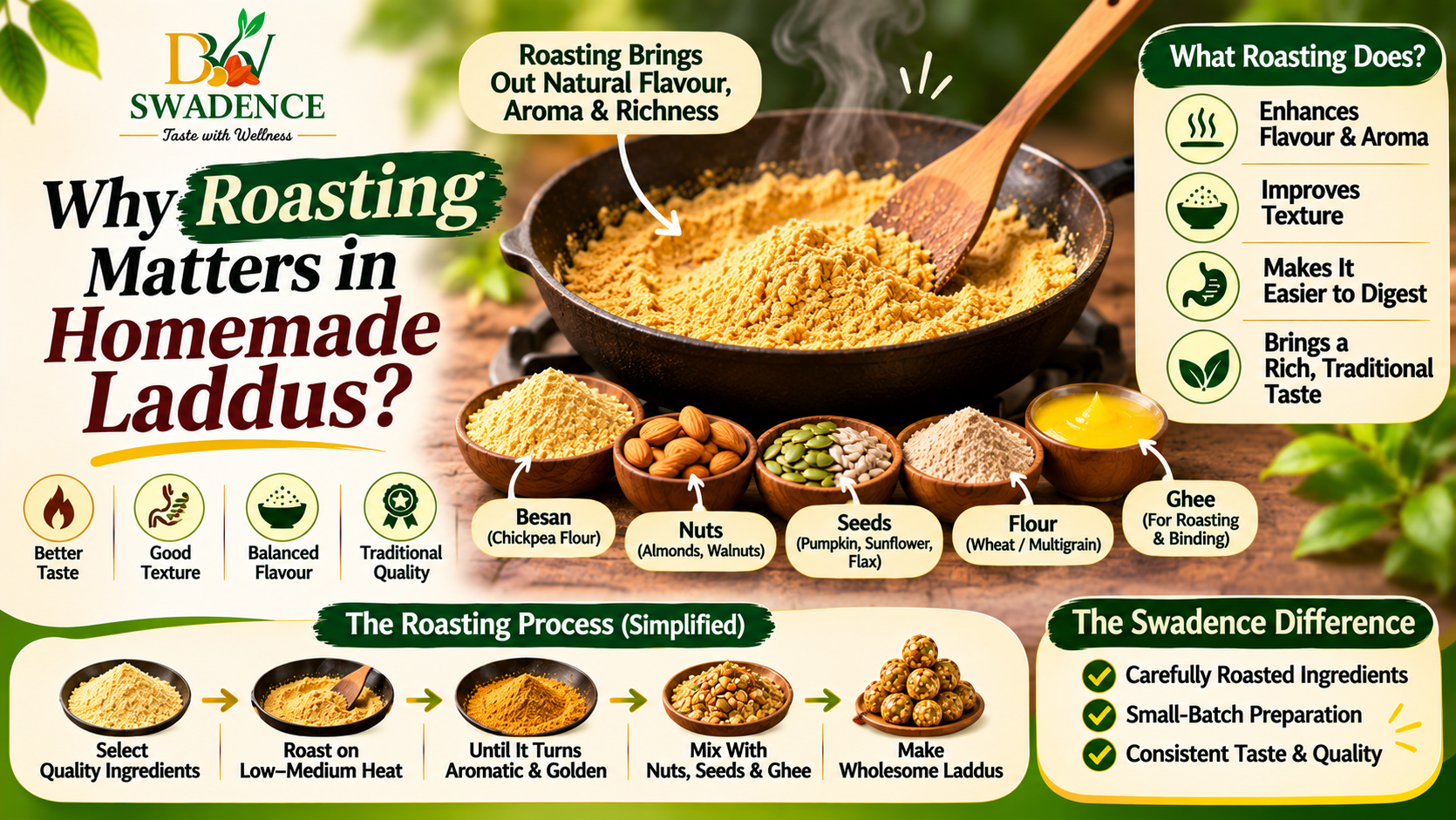
Why Roasting Matters in Homemade Laddus: The Secret Behind Better Flavour
Why Roasting Matters in Homemade Laddus: The Secret Behind Better Flavour
Have you ever noticed the wonderful aroma that fills an Indian kitchen when besan or wheat flour is slowly roasted in ghee?
That familiar fragrance is one of the most memorable parts of preparing traditional homemade laddus.
But roasting is not just about creating a pleasant smell. It is an important cooking technique that influences the flavour, colour and texture of ingredients.
From besan and whole wheat flour to almonds, walnuts and seeds, many ingredients used in traditional laddus benefit from careful roasting.
So, why does roasting matter so much? Let's explore the science, tradition and preparation techniques behind this important step.
1. What Is Roasting in Traditional Indian Cooking?
Roasting is a cooking technique in which ingredients are heated to develop their flavour, aroma and texture.
In traditional Indian kitchens, roasting is commonly used before preparing laddus, panjiri, halwa and several other homemade foods.
Ingredients are generally heated in a pan over controlled heat, sometimes with ghee, depending on the recipe.
The process allows ingredients to develop their characteristic roasted flavour.
However, roasting requires attention. Different ingredients have different cooking times, and applying excessive heat can burn them.
Good roasting is about controlling temperature, movement and timing.
2. Why Is Roasting Besan Important for Homemade Laddus?
Besan, also known as gram flour, is a popular ingredient in traditional Indian sweets.
Besan laddus are especially known for their rich flavour and distinctive aroma.
Raw besan has a different smell and taste compared with properly roasted besan.
Slow roasting helps develop:
Better Aroma: Heating besan gradually creates its characteristic nutty fragrance.
Deeper Flavour: Roasting develops a richer taste that forms the foundation of traditional besan laddus.
Colour Development: The flour gradually develops a warmer golden appearance.
Improved Texture: Properly roasted besan contributes to the familiar texture of the finished preparation.
The important factor is patience. Roasting besan too quickly over high heat can cause uneven cooking and burning.
3. Why Is Wheat Flour Roasted Before Making Some Laddus?
Whole wheat flour is another familiar ingredient in traditional Indian laddu recipes.
Wheat flour contains natural starches, proteins and other components that contribute to its flavour and texture.
When roasted carefully, it develops a pleasant aroma and a deeper, more satisfying taste.
Ghee is often used during this process to create the characteristic richness associated with traditional atta laddus.
The roasting process should be controlled so that the flour heats evenly.
Properly roasted flour contributes to the overall flavour and consistency of the final preparation.
4. Why Should Nuts Be Roasted Carefully?
Nuts are widely used in traditional Indian wellness foods.
Almonds, walnuts and other nuts add flavour, texture and nutritional variety to laddus.
Roasting can enhance their natural nutty aroma and create a pleasant crunch.
Different nuts respond differently to heat.
Almonds: Light roasting can develop a more pronounced nutty flavour.
Walnuts: Gentle heating can enhance their aroma, but excessive heat may negatively affect their delicate fats and flavour.
Cashews: Roasting develops their characteristic rich taste and golden appearance.
It is important to remember that nuts do not always require roasting. Some recipes use them raw, while others use lightly roasted or chopped nuts.
The preparation method depends on the recipe and desired texture.
5. Why Are Seeds Included in Roasted Laddu Recipes?
Seeds are small ingredients that can contribute a variety of nutrients and textures.
Some commonly used seeds include:
Flax Seeds: Contain dietary fibre and alpha-linolenic acid, a plant-based omega-3 fatty acid.
Pumpkin Seeds: Provide protein, unsaturated fats and minerals such as magnesium.
Sunflower Seeds: Contain vitamin E, protein and unsaturated fats.
Roasting certain seeds can enhance their aroma and flavour.
However, seeds should generally be roasted gently because excessive heat can affect their taste and the quality of their fats.
Different seeds also have different roasting requirements.
Understanding these differences helps create a more balanced flavour profile.
6. What Happens When Ingredients Are Not Roasted Properly?
Roasting is a relatively simple process, but mistakes can affect the final product.
Under-Roasting
Insufficient roasting may leave flour with an unpleasant raw taste and aroma.
Over-Roasting
Excessive heat can burn ingredients and create bitter flavours.
Uneven Heating
Ingredients may develop inconsistent colour and flavour when they are not stirred properly.
Incorrect Heat Control
Using excessive heat can cause the outer surface to brown quickly while the inside remains insufficiently cooked.
This is why controlled heat and regular stirring are important during traditional laddu preparation.
7. Why Patience Is Important During Roasting
Traditional Indian cooking often requires patience, particularly when preparing flour-based sweets.
Slow and controlled roasting allows ingredients to develop flavour gradually.
Instead of increasing the flame to finish the process quickly, maintaining suitable heat helps achieve more consistent results.
Some useful practices include:
- Use a suitable heavy-bottomed pan.
- Maintain controlled heat.
- Stir ingredients regularly.
- Roast different ingredients separately when their cooking requirements differ.
- Avoid leaving ingredients unattended.
- Allow roasted ingredients to cool appropriately before combining them.
These simple techniques can make a noticeable difference to the final preparation.
8. How Roasting Affects the Final Laddu Texture
Texture is one of the most important characteristics of a good laddu.
Depending on the recipe, roasting can influence:
Smoothness: Properly prepared flour contributes to a more consistent mixture.
Richness: Ghee and roasted ingredients help create the characteristic mouthfeel of traditional laddus.
Crunch: Roasted nuts and seeds can add a pleasant contrast to softer ingredients.
Binding: The combination of ingredients and appropriate quantities of ghee or other binding ingredients helps determine whether the mixture holds its shape.
A good laddu is not simply a combination of ingredients. It is also the result of choosing the right preparation method.
9. Why Small-Batch Preparation Requires Attention
Small-batch preparation allows greater attention to individual cooking stages.
When preparing traditional laddus, different ingredients may require separate roasting times and different heat levels.
For example, besan, almonds and flax seeds do not necessarily need the same roasting duration.
Preparing ingredients carefully helps maintain better control over their individual flavour and texture.
However, small-batch preparation alone does not guarantee product quality. Ingredient selection, hygiene, temperature control, storage and packaging are equally important.
Every stage contributes to the final food product.
10. Roasting and Traditional Indian Food Heritage
Roasting has been an important part of Indian cooking for generations.
Our mothers and grandmothers often prepared ingredients slowly, paying attention to colour, aroma and texture rather than relying only on fixed cooking times.
These traditional methods were developed through practical experience.
Today, modern food preparation can combine this culinary knowledge with better ingredient measurement, controlled processes and improved packaging practices.
The goal is not to replace traditional methods but to understand and preserve the techniques that make familiar recipes special.
11. The Swadence Approach to Thoughtful Food Preparation
At DB6V Swadence, traditional Indian food preparation provides inspiration for creating convenient products suited to modern routines.
Roasting is an important consideration in recipes that use flour, nuts and seeds because it influences their flavour and texture.
Our food philosophy focuses on:
- Thoughtful ingredient selection.
- Careful preparation.
- Attention to flavour and texture.
- Traditional Indian food inspiration.
- Convenient individual packaging.
- Transparent product information.
The aim is to bring familiar food experiences into a more convenient format without making exaggerated nutritional or health claims.
For us, the preparation process matters just as much as the ingredients.
12. What Should You Look for in a Quality Laddu?
When choosing packaged laddus or other traditional snacks, consider more than appearance.
Check the following details:
Ingredient List: Understand which flours, nuts, seeds, sweeteners and fats are included.
Nutritional Information: Review calories, carbohydrates, protein, total fat and sugar.
Texture and Appearance: Look for products that match their stated preparation and product description.
Allergen Information: Check whether the product contains peanuts, tree nuts, milk or other allergens.
Manufacturing Information: Review the manufacturer's details and applicable food safety information.
Storage Instructions: Follow the recommended storage conditions.
Shelf Life: Check the manufacturing and best-before or expiry information.
Being informed helps you choose products that suit your preferences and dietary requirements.
Frequently Asked Questions
Q1. Why is roasting important when making homemade laddus?
Roasting develops the flavour, aroma and texture of ingredients such as besan, wheat flour, nuts and seeds.
Q2. Why should besan be roasted slowly?
Slow, controlled roasting helps develop the characteristic aroma and flavour of besan without burning it.
Q3. Can almonds and walnuts be roasted before adding them to laddus?
Yes. Depending on the recipe, nuts can be lightly roasted to enhance their aroma and flavour.
Q4. Should all seeds be roasted before making laddus?
No. Some recipes use raw seeds, while others use roasted seeds. The appropriate method depends on the ingredient and recipe.
Q5. What happens if besan is not roasted properly?
Insufficient roasting may leave an unpleasant raw flavour, while excessive roasting can produce a burnt or bitter taste.
Q6. Does roasting make food healthier?
Roasting is primarily a cooking technique used to develop flavour and texture. Its nutritional effects depend on the ingredient, temperature and cooking duration.
Q7. Why is ghee used while roasting flour for laddus?
Ghee contributes flavour, aroma and richness. It also helps create the characteristic consistency of many traditional flour-based laddus.
Q8. Why are ingredients sometimes roasted separately?
Different ingredients require different cooking times and heat levels. Roasting them separately helps achieve more consistent results.
Q9. Does small-batch preparation improve food quality?
Small-batch preparation can allow greater attention to individual ingredients and cooking stages. However, overall quality also depends on hygiene, ingredient quality, storage and packaging.
Q10. What makes traditional homemade laddus special?
Their familiar ingredients, preparation techniques, distinctive aroma and traditional flavours make homemade laddus an important part of Indian food culture.
Final Thoughts
A delicious homemade laddu is the result of more than simply mixing ingredients together.
The roasting process plays an important role in developing the aroma, flavour and texture that make traditional Indian sweets so familiar and enjoyable.
From besan and wheat flour to almonds, walnuts and seeds, every ingredient deserves the right preparation method.
At DB6V Swadence, we believe traditional food deserves thoughtful preparation, carefully selected ingredients and convenient presentation.
Because sometimes, the difference lies not just in what goes into the recipe, but also in how it is prepared.
DB6V Swadence – Taste With Wellness.